
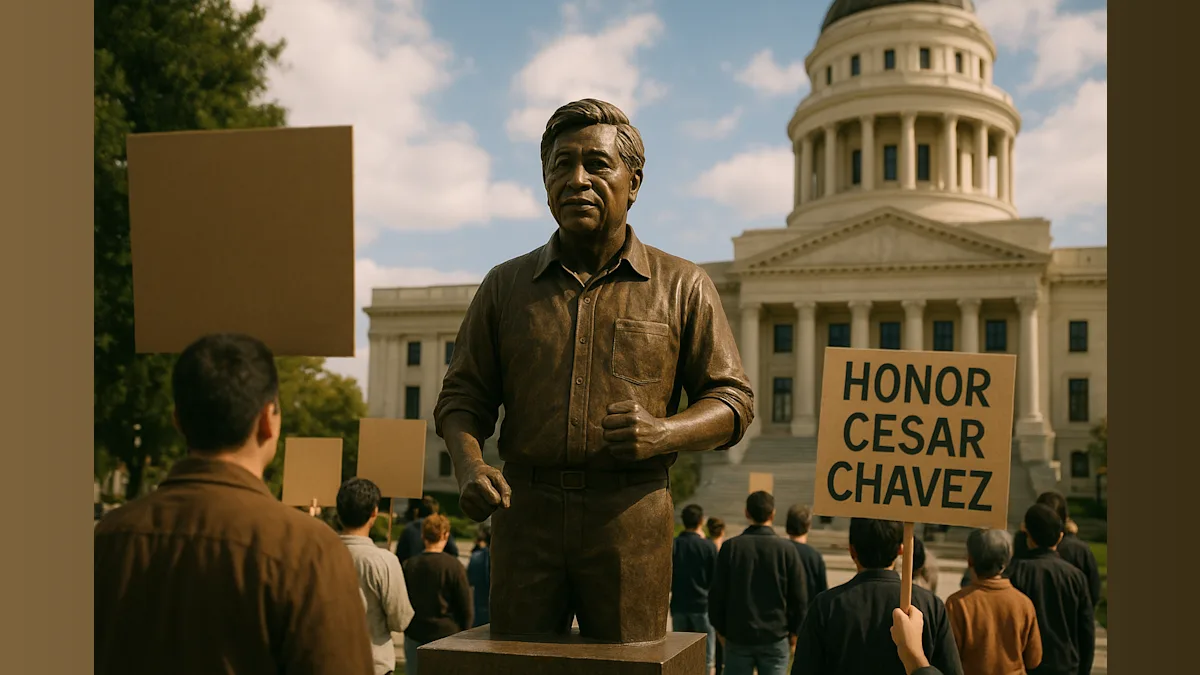
California finds itself at a crossroads as communities across our state wrestle with a challenging question: How do we honor historical figures when new information comes to light that complicates their legacy?
The debate centers on Cesar Chavez, the iconic labor leader and civil rights activist whose name graces numerous parks, streets, and public spaces throughout California. Recent allegations of abuse have prompted some lawmakers and community groups to reconsider these honors, sparking intense discussion about accountability, historical context, and how we commemorate our past.
This isn't just an abstract debate—it affects our daily lives. Many of us drive down Chavez boulevards, visit Chavez parks with our families, or attend schools bearing his name. These spaces are woven into the fabric of our communities, making any potential changes deeply personal.
The controversy highlights a tension our society increasingly faces: recognizing the genuine contributions of historical figures while acknowledging their flaws and failures. Chavez's work organizing farmworkers and fighting for labor rights transformed California and inspired generations of activists. Yet the allegations raise serious questions about personal conduct that can't be ignored.
Community members across California hold diverse perspectives on this issue. Some argue that removing Chavez's name would erase important history and dishonor the farmworker movement he championed. Others believe that maintaining these honors sends the wrong message, particularly to survivors of abuse.
As these conversations unfold in city councils, state committees, and neighborhood meetings, they reflect our evolving understanding of who deserves public commemoration and why. There are no easy answers, but the dialogue itself demonstrates our community's commitment to grappling honestly with complex history.
Whatever decisions emerge from this process, they will shape how future generations understand both Chavez's legacy and our own values as Californians. The outcome will likely vary by community, reflecting local priorities and the voices of those most affected by these choices.
This moment asks us to think critically about how we honor the past while building the future we want to see—a future where we can acknowledge both achievement and accountability.