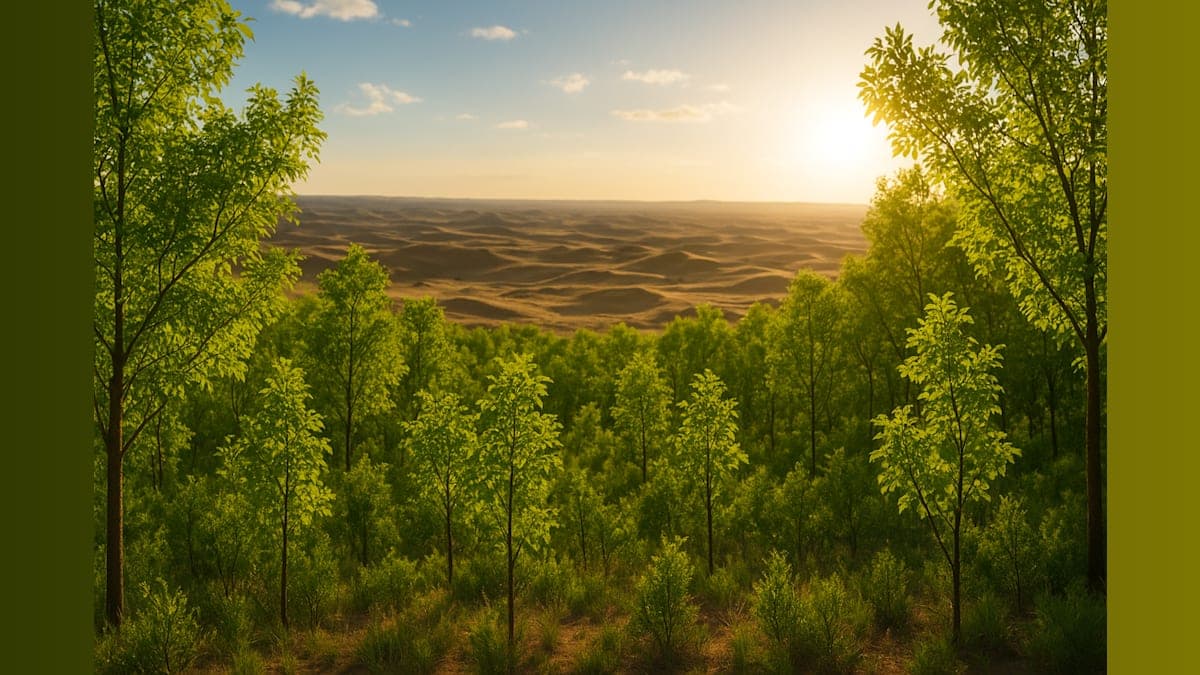
China’s daring endeavor to plant billions of trees around the Taklamakan Desert is yielding remarkable results, transforming a once desolate landscape into a thriving carbon sink. Launched in 1978, the Three-North Shelter Belt program has successfully added an estimated 66 billion trees, creating a natural barrier against sandstorms while simultaneously enhancing carbon absorption capabilities. This truly ambitious project has not only safeguarded nearby agricultural areas but has also contributed to lowering atmospheric CO2 levels.
The desert, previously dubbed the“sea of death,”is now showcasing nature’s resilience. Research from NASA and the California Institute of Technology indicates that human intervention can dramatically enhance carbon storage even in the most arid climates. As rainfall slightly increases and vegetative growth flourishes, the average carbon content in the desert air has dropped from 416 to 413 parts per million. If only all deserts could experience a similar makeover, the potential for combating climate change could be monumental—imagine the message we’d be sending if we turned these harsh terrains into green oases!
About the Author
Andrew Johnson
Andrew Johnson is a contributor to LocalBeat, covering local news and community stories.