
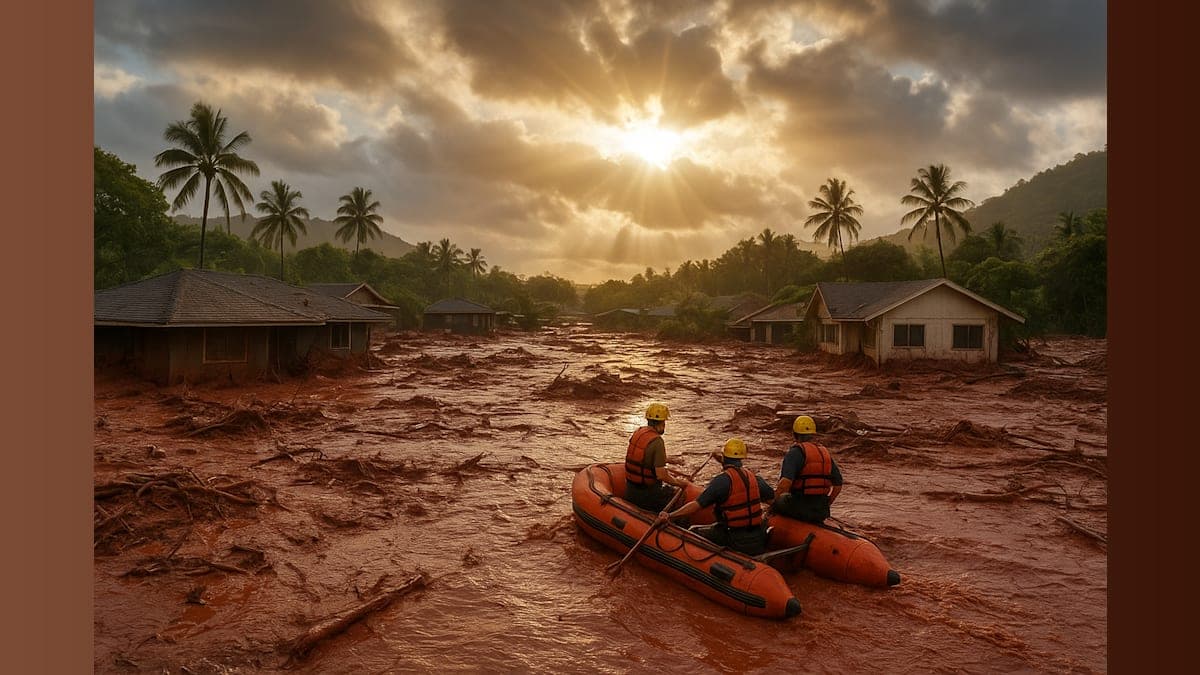
Hawaii is facing its most devastating flooding in two decades, with the deluge wreaking havoc across the islands. Hundreds of homes have been damaged or destroyed, schools and a hospital have stood in the deluge’s path, and the landscape is now a muddy canvas painted with reddish volcanic silt. Governor Josh Green has estimated the costs could skyrocket past $1 billion, an eye-opening figure that reflects the damages to infrastructure and agriculture. Farmers alone reported losses exceeding $9.4 million, making this disaster one of the worst agricultural crises in recent memory.
The rains came down hard, particularly on Oahu’s North Shore, where some residents were forced to escape rising waters on surfboards as they braved waist-deep flooding. Over 230 rescues were made as first responders bravely navigated treacherous conditions. Meanwhile, concerns over the aging Wahiawa dam added to the turmoil, with officials declaring it at risk of failure. While reports of permanent reminders in the form of stained furniture and mud-covered properties emerge, the resilience and spirit of the local community shone through amid the chaos as volunteers stepped up to assist in cleanup efforts.
As the floodwaters recede, residents are left to contemplate the long road ahead for recovery and rebuilding. This disaster highlights the urgent need for improved disaster preparedness and infrastructure maintenance, especially in light of the increased frequency of extreme weather events. The island’s beauty remains, but one wonders—how much longer can it withstand the storms?
About the Author
Andrew Johnson
Andrew Johnson is a contributor to LocalBeat, covering local news and community stories.