
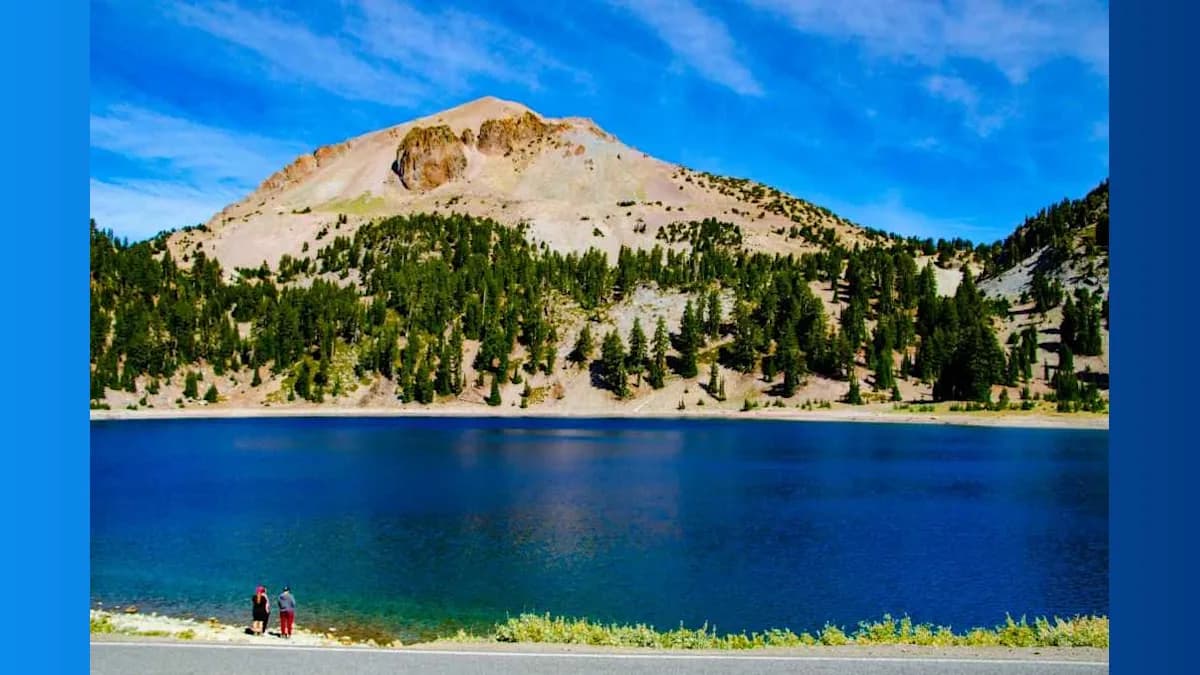
In a surprising twist on extreme life, scientists have uncovered a fascinating single-celled organism in the hot waters of Lassen Volcanic National Park. This newly discovered creature, named Incendiamoeba cascadensis—aptly dubbed the fire amoeba—can survive temperatures as high as 145 degrees Fahrenheit. That’s hotter than many people’s morning coffee, proving yet again that nature knows how to adapt in the most unexpected ways.
Beryl Rappaport, a microbiologist from Syracuse University, leads this eye-opening research. Her findings challenge the previously accepted notion that eukaryotes—like this little amoeba—couldn’t thrive past 140 degrees. This revelation not only helps expand our understanding of life’s limits on Earth but also raises intriguing possibilities about what kinds of organisms might survive on distant planets.
Rappaport’s inspiration stems from the lesser-known Lassen Volcanic National Park, often overshadowed by its more famous counterpart, Yellowstone. With an even larger geothermal lake, Lassen is a treasure trove for microbial wonders waiting to be discovered. Who knows what else hides in those bubbling waters? The exploration isn’t stopping here; further genome sequencing may soon reveal the secrets behind this fire-loving organism’s incredible adaptability.
As scientists continue to push the boundaries of what we know about life’s resilience, there’s something delightfully reassuring about these small marvels like Incendiamoeba cascadensis. If they can embrace the heat, maybe we can learn a thing or two about enduring life’s fiery challenges ourselves.
About the Author
Andrew Johnson
Andrew Johnson is a contributor to LocalBeat, covering local news and community stories.