
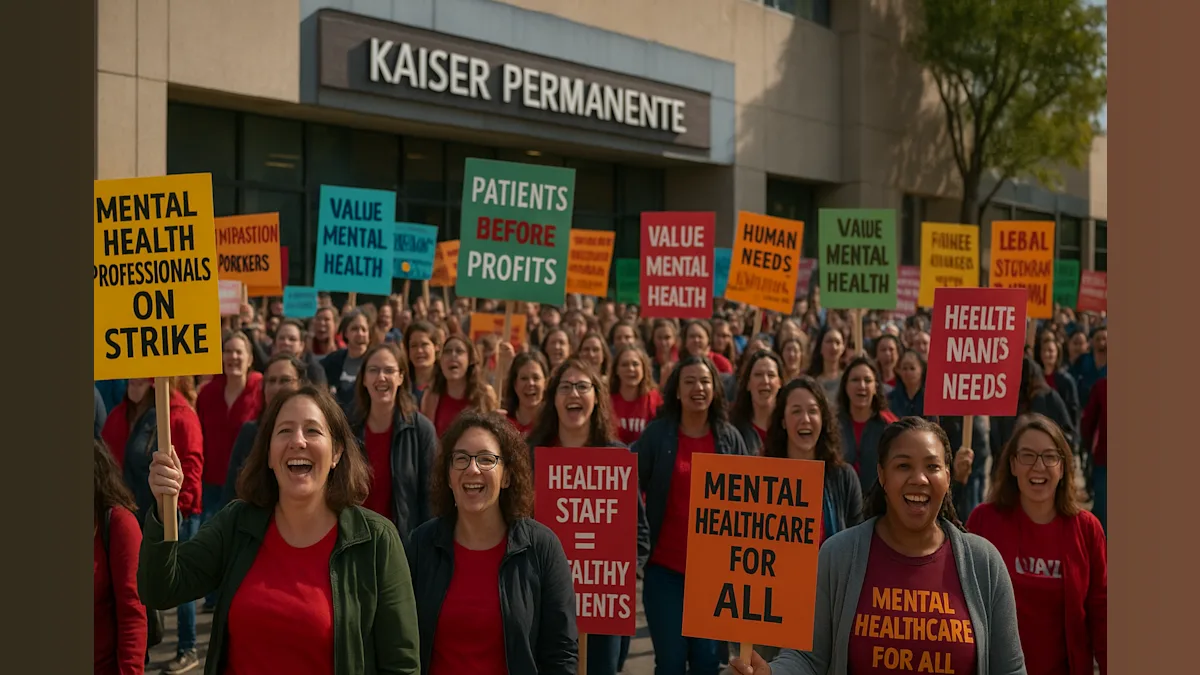
In a striking display of solidarity, around 2,400 mental health professionals from Kaiser Permanente took to the streets in Northern California to protest their fears of being replaced by technology. The one-day strike, which coincided with support from over 23,000 nurses, highlighted concerns that the human element in therapy could be lost in favor of AI solutions. The therapists, including social workers and psychologists, provide critical mental health services to approximately 4.6 million patients across the San Francisco Bay Area, Central Valley, and Sacramento.
While Kaiser Permanente maintains that they don’t currently utilize artificial intelligence in therapy, the National Union of Healthcare Workers is anxious about a future where AI could become a viable alternative for patient care. Dr. Emma Olsen, a psychiatrist and union representative, expressed frustration over management’s attempts to reduce time spent on patient notes, indicating a desire for therapists to handle more patients in less time.
The heart of the matter? Ensuring that the vulnerable populations in our communities receive the compassion and attention they deserve. As Kaiser negotiates with mental health professionals, the ongoing conversations serve as a critical reminder that some jobs may be best left to humans, especially those involving emotional well-being. After all, can a robot offer empathy and understanding, or is it merely good at crunching numbers?
About the Author
Andrew Johnson
Andrew Johnson is a contributor to LocalBeat, covering local news and community stories.