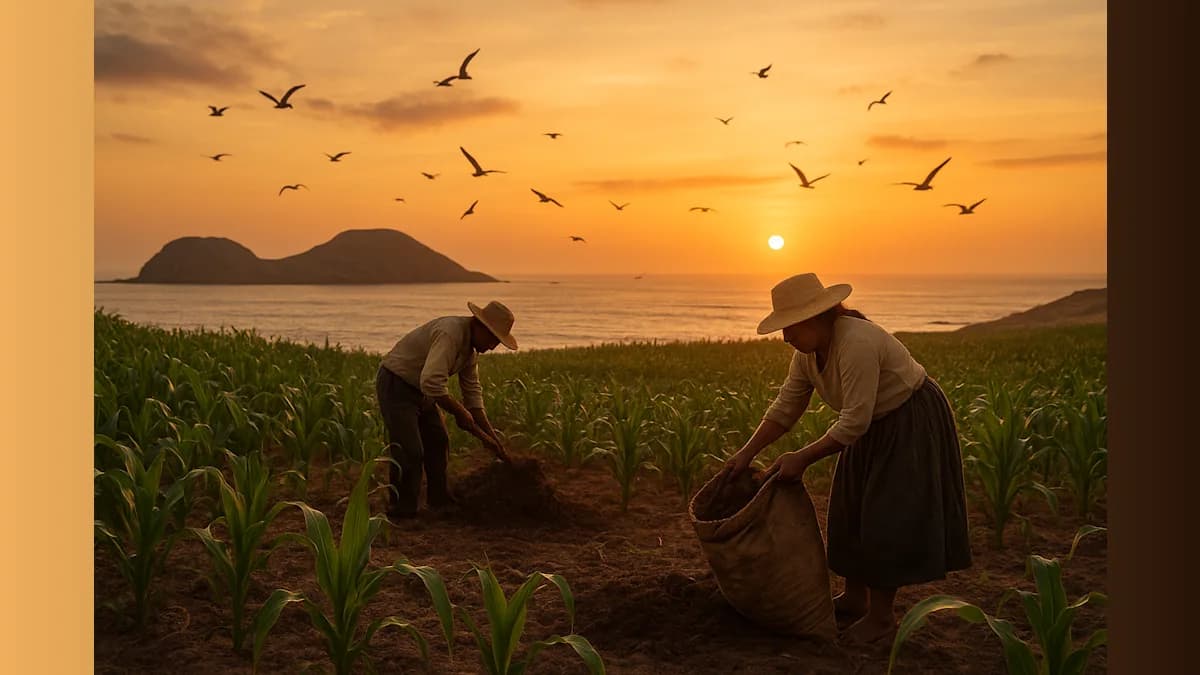
Recent archaeological discoveries reveal that seabird guano, more commonly known as bird droppings, was a secret weapon for prosperity in ancient Peru. Dr. Jacob Bongers from the University of Sydney has uncovered evidence showing how this nutrient-rich fertilizer transformed the agricultural landscape of the Chincha Valley, a region plagued by challenging farming conditions. By enabling coastal farmers to cultivate abundant maize, guano not only boosted crop yields but also became a key player in the rise of a powerful pre-Incan kingdom.
The study analyzed 35 maize samples from burial tombs, revealing high nitrogen levels that suggested the crops were fertilized with seabird guano collected from nearby islands. This agricultural surplus not only fueled local economies but also facilitated trade relationships with the Inca Empire, proving that sometimes nature has the most unexpected ways of building an empire. So, the next time you think of guano, remember it’s not just a matter of waste—it’s a substance that might have seeded the wealth and power of a civilization!
About the Author
Andrew Johnson
Andrew Johnson is a contributor to LocalBeat, covering local news and community stories.