
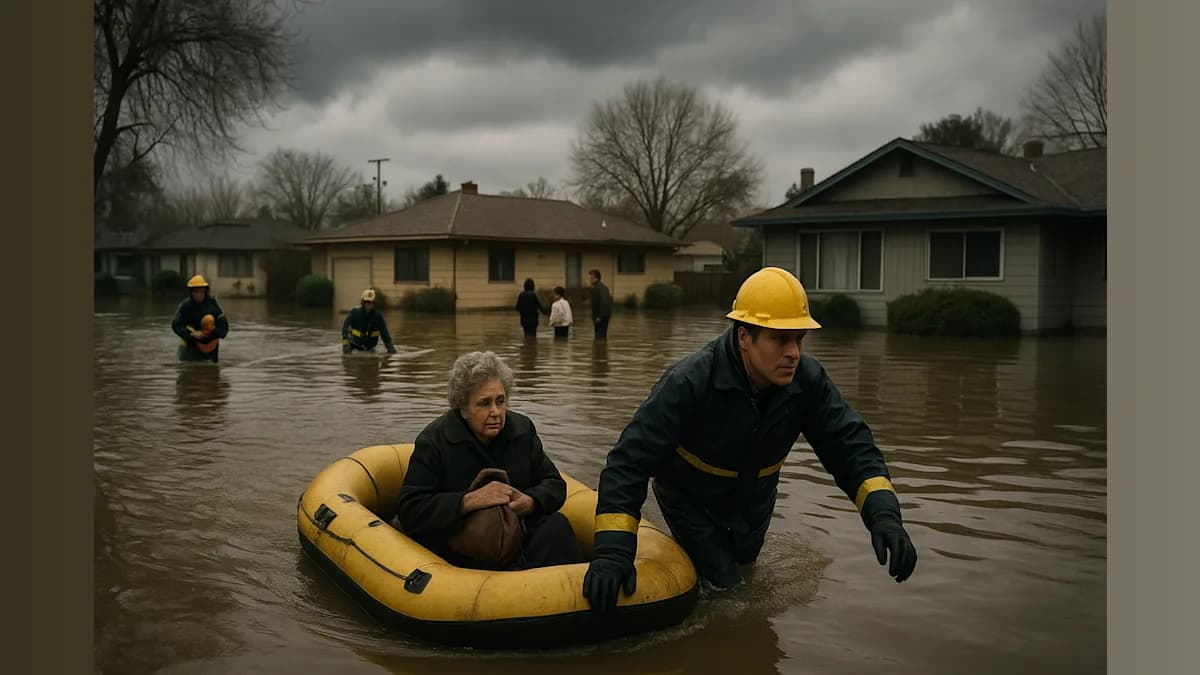
This week marks 40 years since Northern California was dealt a powerful blow by nature, as record-setting rainfall led to devastating floods across the Sacramento Valley. Between February 11 and February 20, 1986, a series of storms unleashed over 34 inches of rain in places like Blue Canyon, resulting in catastrophic conditions that overwhelmed the region’s flood management systems. The Auburn Cofferdam, still under construction at the time, failed spectacularly, causing Folsom Lake to surpass its limits and flooding the surrounding areas.
The consequences were dire — 14,000 buildings were damaged, and tragically, 13 lives were lost. The levees along the American and Sacramento Rivers held firm, saving tens of thousands of residents from even worse destruction, but failures on the Yuba and Mokelumne Rivers proved that no system is infallible. In the wake of this disaster, lessons were learned and investments made, totaling over $600 million to restore and redesign levees, which are now considered vital to improved flood protection.
Fast forward to today and technology has revolutionized how hydrologists and meteorologists gather and analyze weather data, substantially enhancing forecasting accuracy. Although the fear of flooding still lingers, the improvements in flood control measures inspire some hope. Let’s just hope the weather doesn’t decide to remind us anytime soon that nature can still pack a punch!
About the Author
Andrew Johnson
Andrew Johnson is a contributor to LocalBeat, covering local news and community stories.