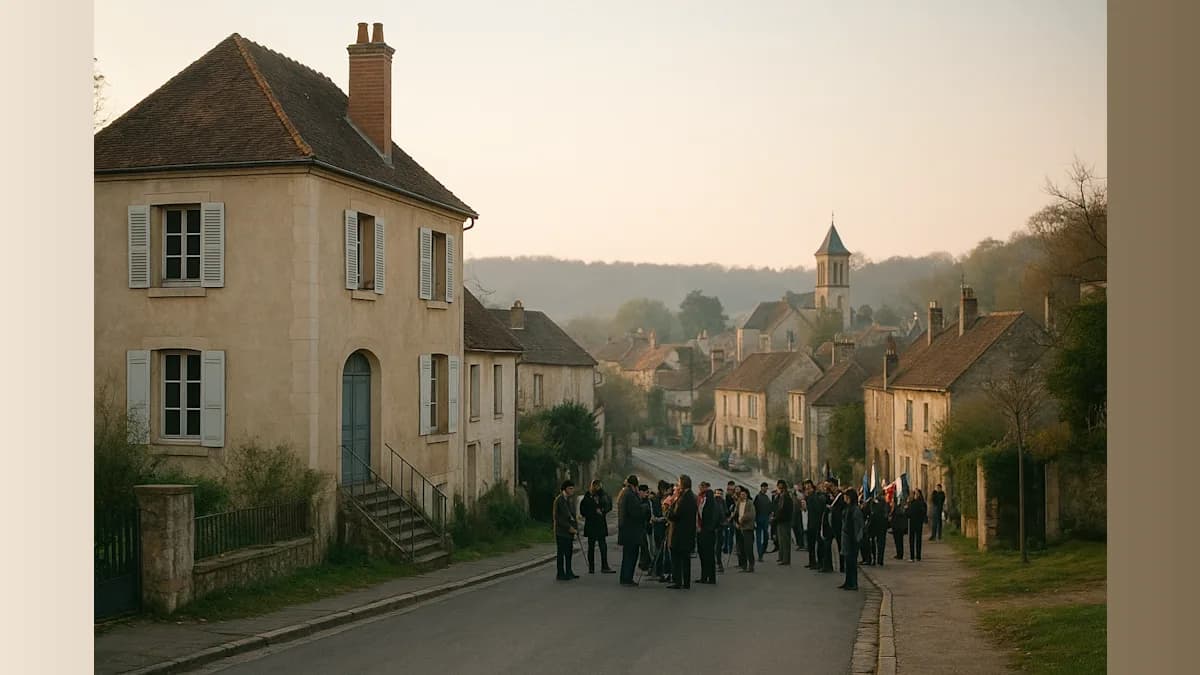
In the affluent village of Neauphle-le-Château, France, Ayatollah Ruhollah Khomeini turned a simple villa into a nerve center for the Iranian Revolution. For a mere 120 days, this pastoral setting buzzed with journalists and a tide of young Iranian supporters, all drawn by the man who would lead their country into a dramatic new chapter in history. The elderly residents reminisce about the barrage of visitors, as Khomeini recorded impassioned speeches condemning Shah Mohammad Reza Pahlavi, spreading revolutionary fervor back home.
After leaving this quiet French retreat in early 1979, Khomeini returned to Iran, and the villa was later destroyed in an explosion. The remnants of that era now draw annual commemorations from hundreds, with locals reflecting on a legacy intertwined with both pride and awkwardness. Neauphle-le-Château continues to grapple with its unexpected notoriety as a footnote of history, where revolutionary dreams collided with suburban tranquility, proving that even the smallest towns can have a big impact on world events.
As the past lingers in the village’s memory, one can’t help but wonder: how do places shape our stories and identities, twisting quiet lives into the fabric of history?
About the Author
Andrew Johnson
Andrew Johnson is a contributor to LocalBeat, covering local news and community stories.