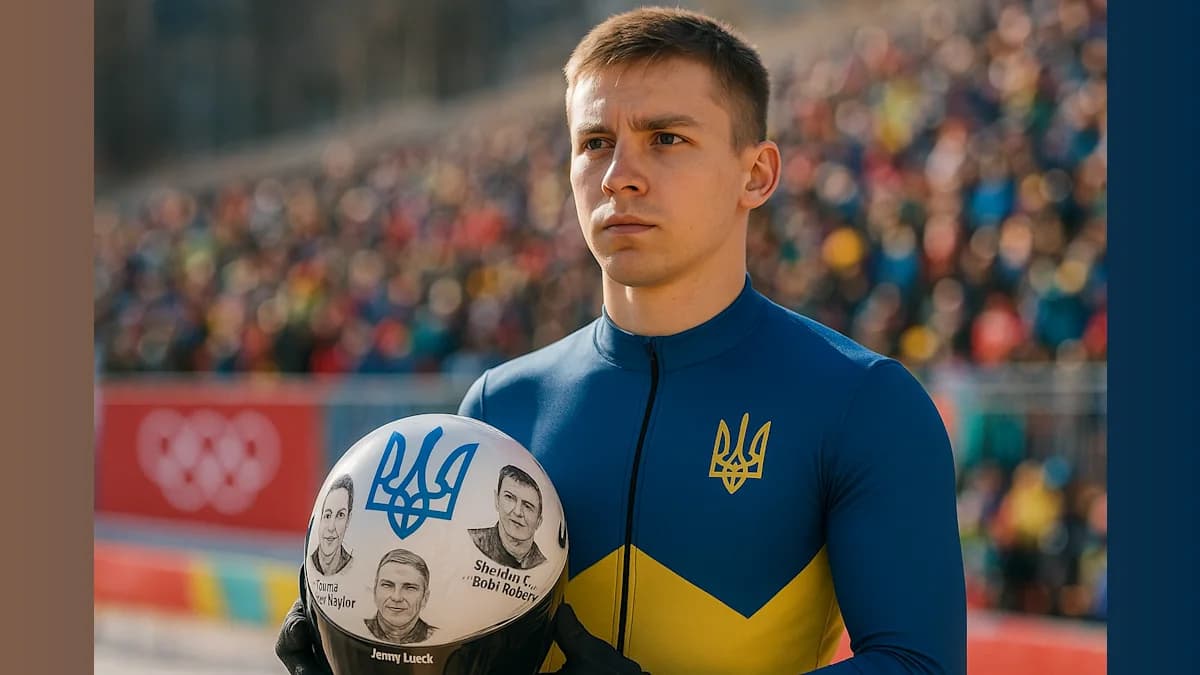
Vladyslav Heraskevych, a standout skeleton athlete from Ukraine, has been benched from the Olympics in a surprising twist that’s causing quite the stir. He refused to remove a custom helmet that honors over 20 Ukrainian athletes and coaches who lost their lives due to the ongoing war. The International Olympic Committee stepped in, declaring that the helmet violated their rules against political messaging.
While Heraskevych insisted his tribute was just that—a remembrance and not a political statement—the IOC had other ideas, offering him a compromise of wearing a black armband instead. Despite their attempts, he stood firm, leading to his disqualification from the competition. This decision didn’t just rev up controversy at the Games; it ignited backlash in Ukraine, where President Volodymyr Zelenskyy denounced the IOC’s stance as a disregard for those who’ve sacrificed for their country.
It raises a thought-provoking question: should sports remain a neutral ground, or is there room for athletes to honor their fallen comrades on an international stage? Such debates could reshape not just the Olympic spirit but the very essence of athletic representation in times of crisis.

About the Author
Ava Hart
Ava Hart is a contributor to LocalBeat, covering local news and community stories.