
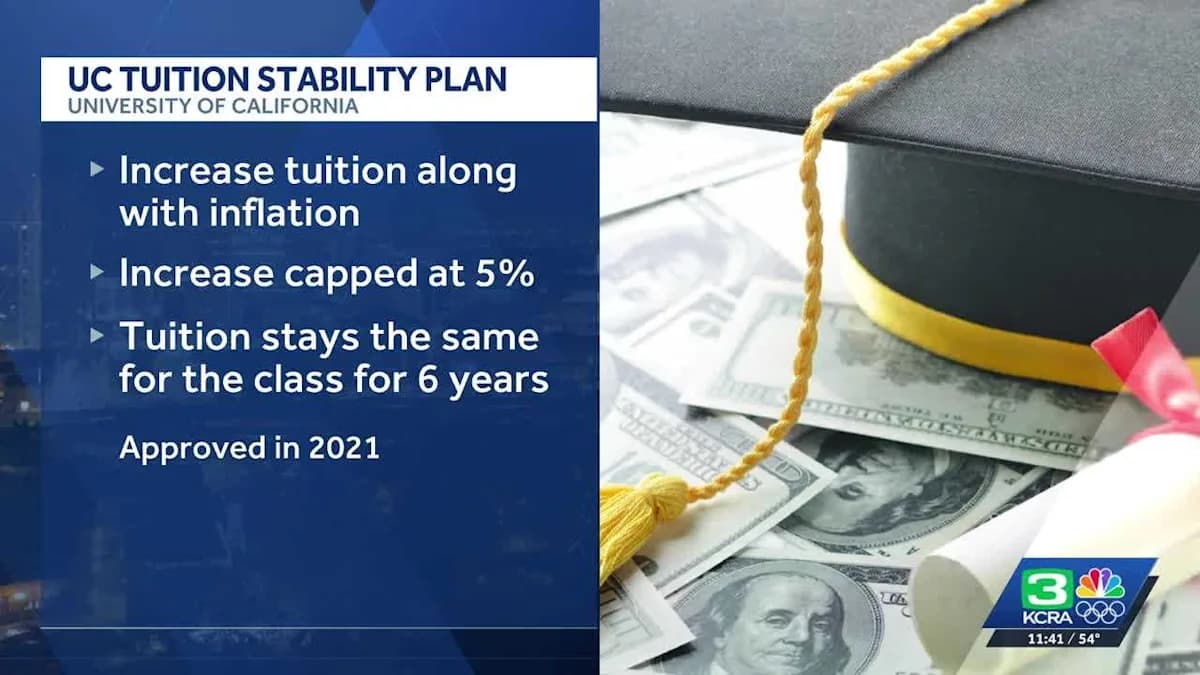
The University of California is once again in the spotlight as the Board of Regents approved a new tuition hike policy, leaving students and families reeling. With a vote of 13 to 3, they’ve set the stage for annual increases of up to 5%—but here’s the twist: current undergrad students won’t feel the pinch until they graduate. Seems like a win, but incoming students will see tuition rise every year while they study, creating a financial wave that leads one cohort to pay more than another.
This policy is rooted in the so-called Tuition Stability Plan, aimed at providing consistency in an often unstable financial landscape for students. However, it’s already generating backlash from students who argue it puts an unfair burden on future generations of scholars. Critics, including California’s Lt. Gov. Eleni Kounalakis, have expressed concern about how these spikes in tuition can impact students already struggling under the pressure of living costs. It’s a complex debate that sees the university walking a fine line between fiscal necessity and student welfare.
As these tuition increases become a reality beginning in 2026-27, one can’t help but wonder how far the cost of education will climb in the coming years. If students are already struggling with basic needs, can we really afford to let tuition become another heavy anchor? Time will tell how the balance between higher education and affordability continues to tip in California.
About the Author
Andrew Johnson
Andrew Johnson is a contributor to LocalBeat, covering local news and community stories.